How Walking 10,000 Steps a Day Improves Focus, Energy, and Freelance Life
One of my biggest goals as a freelancer is simple on paper but powerful in practice: having my health in check so my creativity can actually show up.
For me, that looks like moving my body outside of workouts. Not chasing perfection. Not glamorizing burnout cardio. Just hitting around 10,000 steps most days and letting Sundays slide a little. We can chill. We can rest. Growth still counts.
Why Steps Matter More Than Just Workouts
As freelancers, it’s easy to think, “I worked out today, I’m good.”
But the reality is… one workout doesn’t undo a day spent editing, emailing, driving, and sitting.
There’s a concept in exercise science called Non-Exercise Activity Thermogenesis (NEAT). Fancy name, simple idea.
NEAT includes all the movement you do outside of structured workouts:
Walking while taking phone calls
Pacing during voice notes
Cleaning, organizing, errands
Playing with kids, pets, or just living life
It’s the background movement that keeps your body from going stale while your business grows.
Research shows that even people who exercise regularly can still experience negative health effects if the rest of their day is largely sedentary. Translation: movement throughout the day matters just as much as gym time.
My Freelancer-Friendly Goal: 10K-ish Steps
Ten thousand steps isn’t magic, but it’s a solid benchmark. It usually equals about 90–100 minutes of casual movement spread throughout the day, not all at once.
Some days I hit it easily.
Sundays? We vibe. Recovery is productive too.
The real goal isn’t the number.
It’s momentum, consistency, and energy.
Hitting 10K steps doesn’t require marathon walks or extra gym time. It’s about stacking small movements throughout the day. These seven habits are how I realistically get there most days without forcing it.
1. Walk and Talk
If you’re on the phone, you don’t need to be glued to a chair. Calls, voice notes, brainstorms, even casual check-ins are perfect walking opportunities. Pace your office, tidy up, or step outside if weather allows.
Two 15-minute phone walks = ~3,000 steps
2. Use a Walking App for Structure
Sometimes motivation helps. Walking apps add just enough accountability without pressure. A short recovery walk after editing or between tasks can reset your focus and quietly build steps.
One 25-minute walk = ~2,500 steps
3. Netflix… But Move
Watching a show doesn’t have to mean sitting still. Stretch on the floor, do light mobility, or move between rooms during episodes. It’s low effort but keeps your body from locking up after long workdays.
15 minutes of mobility or stretching = ~1,000 steps
4. Podcast Your Housework
Housework counts. Throw on a podcast or audiobook and move with intention. Dishes, laundry, tidying, and organizing all add up, especially when you stay on your feet longer than planned.
25 minutes of housework = ~2,400 steps
5. Schedule Walking Meet-Ups
Not every meet-up needs a chair and a coffee. Walk while you catch up. Parks, trails, museums, or quiet streets all work. Keep it casual. Keep it moving.
A 60-minute walk-and-talk meet-up = ~3,500 steps
6. Reframe Family or Play Time
If kids, pets, or family are part of your day, movement is already built in. Get on the floor. Play outside. Take walks together. It’s connection and activity wrapped into one.
30 minutes of active play = ~2,400 steps
7. Become a NEAT Opportunist
This is where the magic really happens. Park farther away. Take the stairs. Walk short errands instead of driving. Stand up between edits. Individually these movements feel small, but together they quietly push you toward 10K.
Extra daily movement = ~1,000 steps
The Takeaway: You don’t need all seven every day. You just need enough movement stacked consistently.
Some days you’ll hit 10K effortlessly. Other days you’ll land close and still win.
And Sundays? We rest. We live. We flourish anyway.
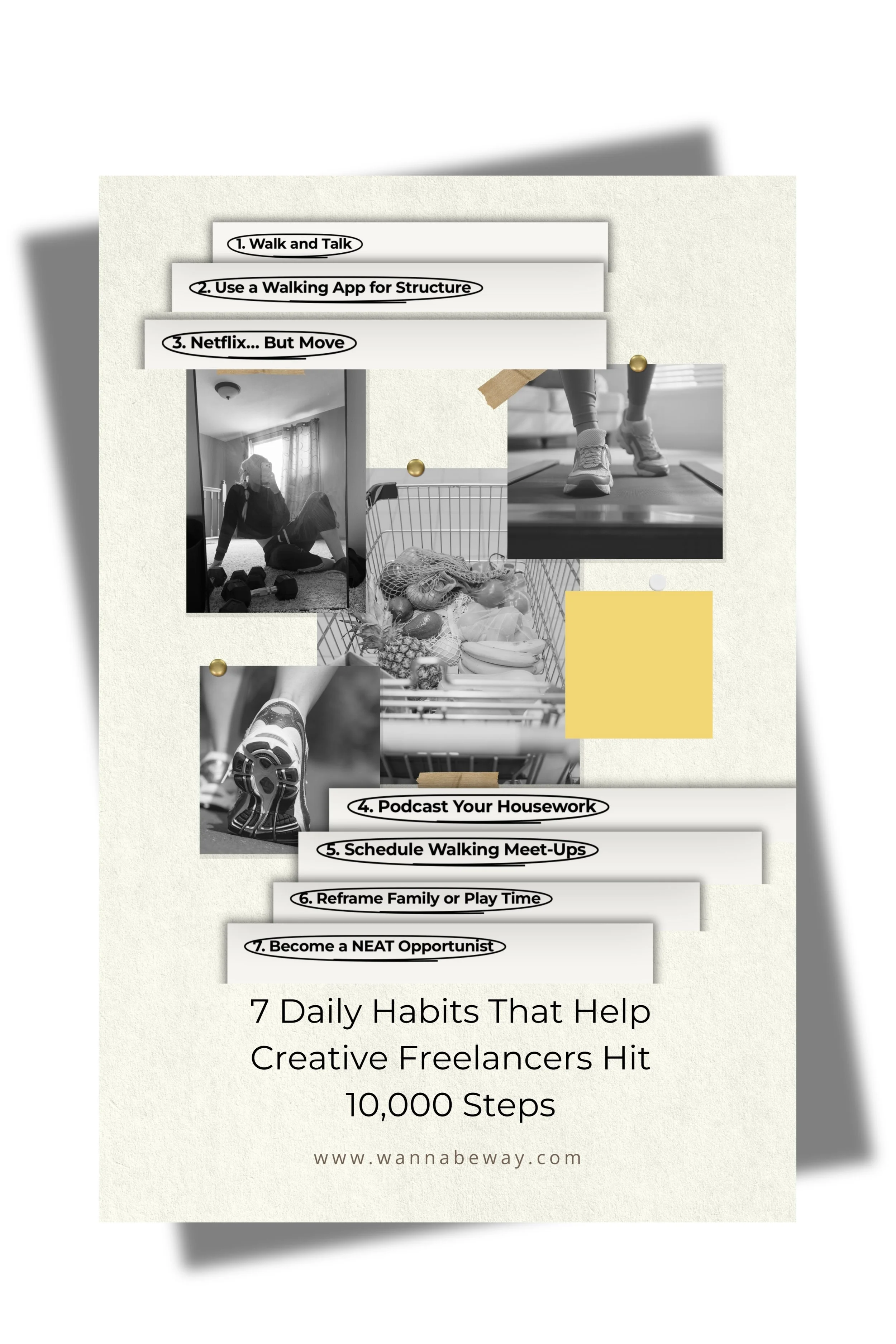
7 daily habits that hellp creative freelancers hit 10k steps
Heffernan, A. (2024, August 2). How much activity should you get outside of exercise?
Concepts adapted from research on Non-Exercise Activity Thermogenesis (NEAT) and daily movement patterns.
Levine, J. A. (2004). Non-exercise activity thermogenesis (NEAT): environment and biology.
American Journal of Physiology-Endocrinology and Metabolism, 286(5), E675–E685.
Tremblay, M. S., et al. (2017). Sedentary behavior research network (SBRN) terminology consensus project.
International Journal of Behavioral Nutrition and Physical Activity.